
You walk into your home, take a breath, and notice it: a persistent, heavy, earthy odor. It isn’t the garbage, and it isn’t last night’s dinner. It’s that unmistakable “musty” smell.
Many homeowners assume that if they can’t see dark spots spreading across their walls, they don’t have a mold problem. Unfortunately, your nose is often a far more sensitive detector than your eyes. Mold thrives in the dark, quiet, unventilated spaces of your home.
If you’re smelling something off but your walls look pristine, here’s exactly what that odor means, why it’s happening, and where that mold is likely hiding.
What Does Mold Actually Smell Like?
People describe the scent of indoor mold in a few different ways, but they all point back to organic decomposition. The most common descriptions include:
- Wet cardboard or paper left in a plastic bag
- Rotting wood or decaying autumn leaves
- A damp, unventilated basement or gym locker
- A pungent, stale, “sour” note that lingers even when windows are open
The Science Behind the Smell
What you are actually smelling aren’t the mold spores themselves, but Microbial Volatile Organic Compounds (mVOCs). As mold digests organic building materials—like the paper backing on your drywall, plywood subfloors, or carpet padding—it releases these gases as a byproduct of its metabolism.
If you can smell it, the mold is actively growing and feeding. A dormant, completely dry mold colony emits very little odor. A strong, earthy smell means there is an active moisture source keeping the colony alive.
3 Hidden Places Mold Colonies Grow in Local Homes
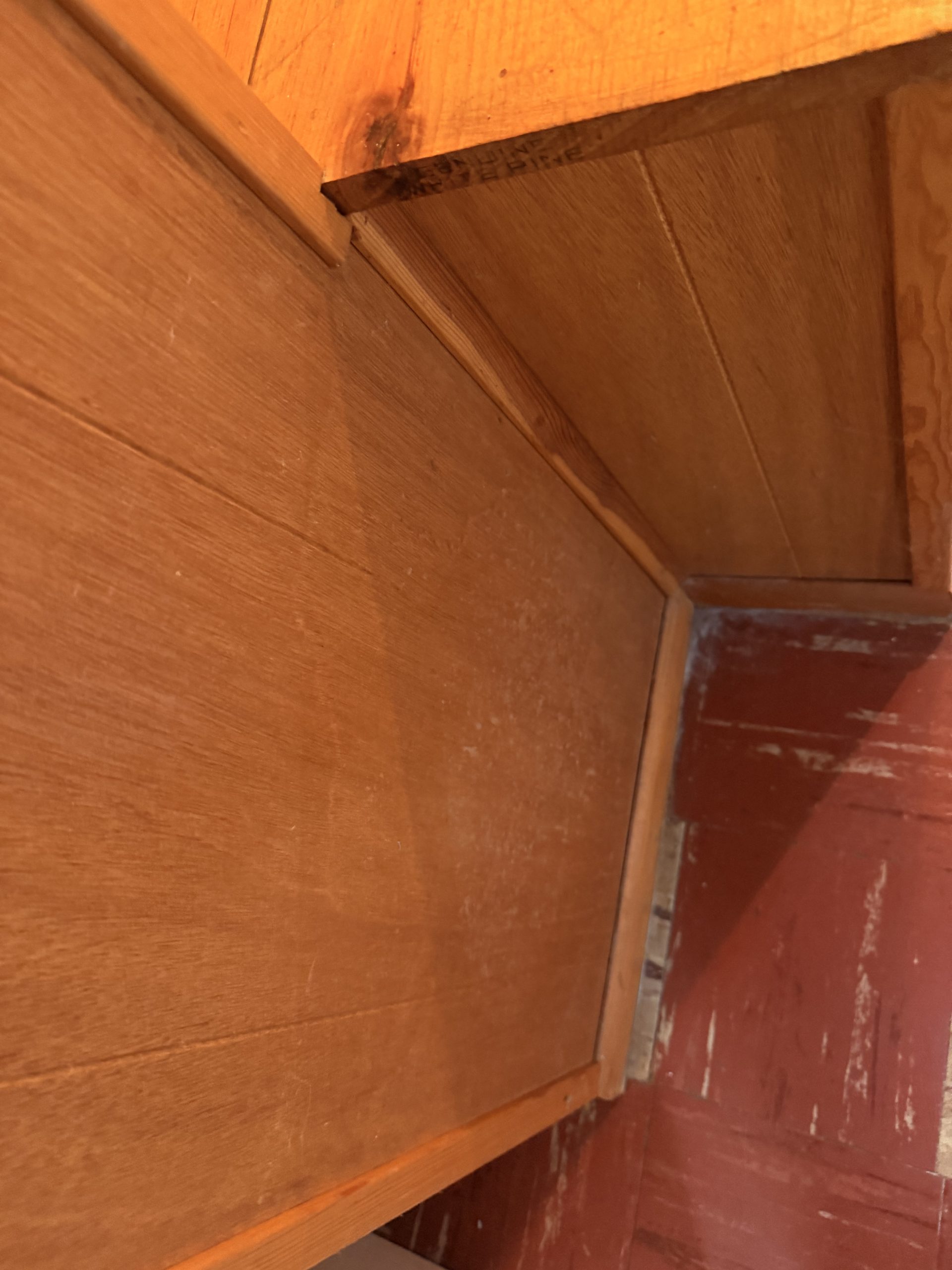
This space looks mold-free, but a bright light reveals more than meets the eye…
Because mold requires moisture, oxygen, and a food source to survive, it seeks out the hidden cavities of your home where water vapor gets trapped.
In our local climate—with high seasonal humidity, rapid spring thaws, and heavy rains—three specific areas are notorious for hidden mold growth.
- Vented and Dirt-Floor Crawlspaces
Crawlspaces are the number one culprit for invisible odors. Many homes rest over dirt floors or poorly sealed crawlspaces.
When warm, humid summer air enters a cool crawlspace through traditional vents, it hits cold foundation walls and joists, causing immediate condensation. This moisture locks into the floor joists and subflooring directly above. Because of the natural upward movement of air in a home, up to 50% of the air you breathe on your first floor is pulled straight up from your crawlspace—bringing that musty mVOC smell with it.
- Inside Drywall Cavities (Especially After Heavy Rain)
A leaky roof, failing window flashing, or a minor gutter overflow can send rainwater cascading down inside your exterior wall cavities.
Drywall acts like a giant sponge. The front face of the drywall is painted, which can temporarily mask water staining and keep it looking perfectly fine. However, the unpainted paper backing inside the dark, unventilated wall cavity remains wet for days. This creates an absolute paradise for molds, which can blanket the interior of a wall long before a single spot shows through the paint.
- Deep Beneath Carpeting and Padding
Whether it’s from an old basement sump pump failure, a spilled pet bowl, or high concrete slab humidity, carpet padding loves to trap moisture.
If a carpet gets wet and isn’t completely dried within 24 to 48 hours, mold will begin to grow in the porous padding beneath. You can vacuum the top fibers until they look spotless, but every time you step on the carpet, you act like a bellows, pumping hidden mold spores and musty gases up into your living breathing space.
How Do Professionals Find Mold You Can’t See?
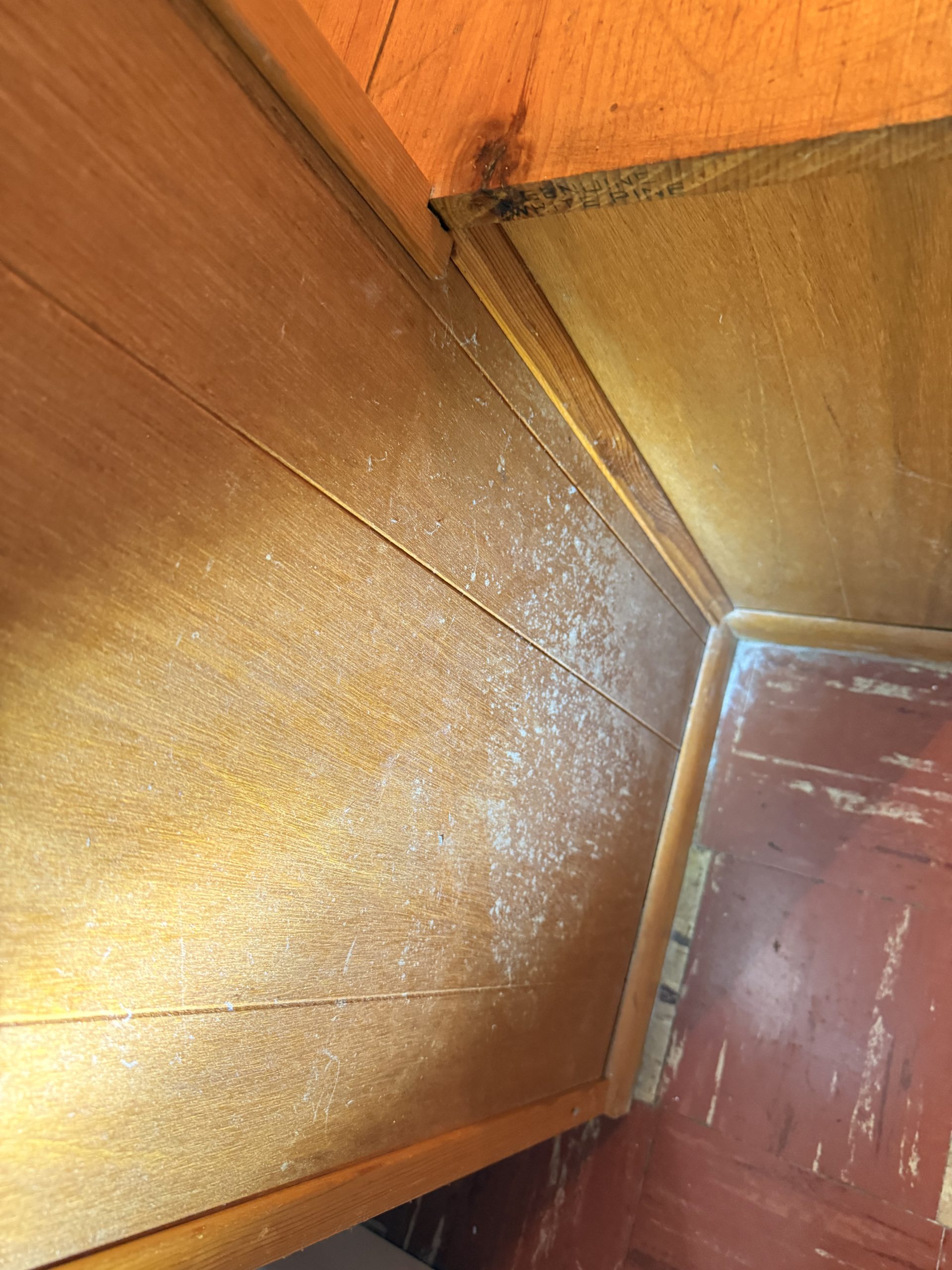
A bright light reveals the mold hidden on the surface. Mold is not always visible easily!
If the smell is there but the visual evidence isn’t, spraying air freshener or lighting candles will only mask a growing structural issue. Finding hidden mold requires a strategic, scientific approach rather than guesswork.
- Thermal Imaging (Infrared Cameras): Moisture changes the temperature of building materials. By scanning walls with infrared technology, professionals can spot hidden water leaks and damp drywall cavities behind completely dry paint.
- Moisture Meters: Structural prongs can measure the exact moisture content inside wood flooring, drywall, and studs to identify active “wet zones.”
- Comparative Air Sampling: By capturing a specific volume of air from the room with the odor and comparing it against a control sample taken outside, a laboratory analysis can prove whether hidden mold spores are elevated indoors—even if they are completely tucked behind a wall.
Next Steps: Don’t Ignore Your Nose!
If your home has developed a persistent, musty odor that doesn’t disappear with a deep clean, it is time to investigate before the hidden colony expands. Locating the moisture source and stopping the growth early saves thousands of dollars in structural demolition down the road.
Don’t let hidden mold compromise your indoor air quality or your family’s health. If you are dealing with a mystery odor in Ann Arbor, Ypsilanti, Saline, or anywhere in the greater Washtenaw area, our team is here to help.
We bring the advanced diagnostic tools—like thermal imaging and precise air quality testing—needed to pinpoint exactly where the problem is hiding without tearing up your home. Reach out to Rick and the team today to schedule an inspection and mold removal, and finally clear the air.